
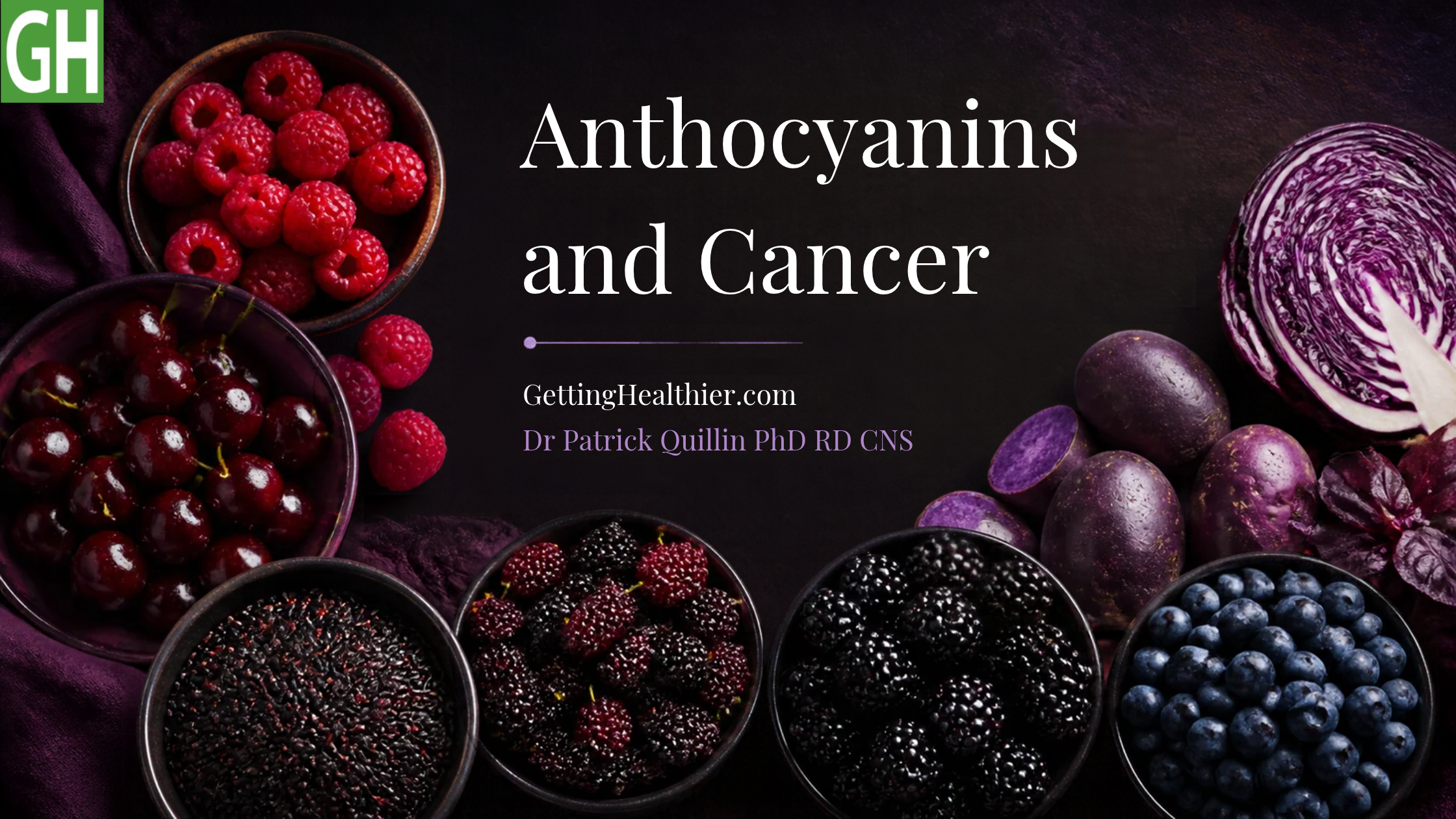
Purple Foods That Fight Cancer: Why Anthocyanins Belong on your Plate
Did you know that one of the most useful tools for fighting cancer might be hiding in plain sight in the produce aisle? In my decades of work in cancer nutrition, I have watched the right foods change the game for patients. Food will not replace your oncologist. But what you eat every day shapes how well your body handles treatment, how strong your immune system stays, and how much energy you have to keep going.
When I walk patients through the grocery store, I give them one simple rule: look for deep, dark colors. And the darkest, richest colors of all, the deep purples, blues and near-blacks, come from a family of plant compounds called anthocyanins.
In this article, you will learn what anthocyanins are, what the research says about anthocyanins and cancer, which purple foods give you the most benefit, and how to eat them even when treatment has left your stomach sensitive.
watch related video at the end

What Are Anthocyanins?
Anthocyanins are natural pigments that give plants their deep purple, blue, red and black colors. The name comes from two Greek words: anthos (flower) and kyanos (dark blue).
Plants make anthocyanins to protect themselves from ultraviolet light, insects, cold and disease. When you eat these plants, you borrow some of that protection.
Anthocyanins belong to a larger group called flavonoids, part of the polyphenol family. They are best known as antioxidants. That means they help neutralize free radicals, the unstable molecules that can damage your cells and your DNA.
A simple way to remember it: the darker the color, the more anthocyanins. A wild blueberry that stains your fingers carries far more of these pigments than a pale, watery fruit.
Anthocyanins and Cancer: What the Research Shows
Scientists have studied anthocyanins and cancer for decades. Most of the strongest findings come from lab and animal studies, with a growing number of small human trials. Here is what that research points to.
1. Slowing tumor cell growth. In lab studies, anthocyanin-rich extracts slow the growth of several types of cancer cells, including colon, breast, esophageal and oral cancer cells. In some studies, they also nudge cancer cells toward apoptosis, the natural self-destruct program that healthy cells follow and cancer cells ignore.
Support your body’s natural cancer defenses
2. Cutting off the tumor’s blood supply. A tumor cannot grow much beyond the size of a pinhead without building its own blood vessels. This process is called angiogenesis. Lab research shows anthocyanins can interfere with the signals tumors use to recruit new blood vessels, which may help starve them of oxygen and nutrients.
3. Protecting DNA. Cancer often begins with damaged DNA. As antioxidants, anthocyanins help shield your genetic material from oxidative damage, which matters both for prevention and for protecting healthy cells.
4. Calming chronic inflammation. Long-term inflammation creates an environment where cancer thrives. Anthocyanins help turn down inflammatory pathways in the body.
Black raspberries are one of the best-studied examples. Researchers at The Ohio State University gave freeze-dried black raspberry powder to patients with colorectal cancer and oral lesions in small clinical studies. They saw favorable changes in markers of cell growth and inflammation in the affected tissue.
A word of honesty: lab results do not automatically translate to people, and no food cures cancer. But the evidence is consistent enough, and the foods are safe enough, that I recommend purple foods to nearly every cancer patient I work with.

6 Purple Foods for Cancer Patients
You do not need exotic superfoods. These six are easy to find and easy to use.
1. Wild Blueberries
Wild (lowbush) blueberries are smaller than cultivated blueberries, but they pack more anthocyanins per bite, because more of the fruit is dark skin. You will usually find them in the freezer section, which is perfect: frozen berries keep their nutrients and last for months. Stir them into oatmeal, yogurt or a smoothie.
2. Black Raspberries
As you read above, black raspberries are among the most studied anthocyanin foods in cancer research. Fresh ones have a short season, so look for frozen berries or freeze-dried black raspberry powder to add to smoothies.
3. Purple Cabbage
Cooking purple cabbage in plain, neutral tap water can turn it a dull blue-grey. Adding an acid (like vinegar or lemon juice) preserves or restores its vibrant reddish-purple color.
4. Purple Sweet Potatoes
Purple sweet potatoes combine anthocyanins with soft, easy-to-digest starch. Mashed or baked, they are one of my favorite foods for patients who need calories but can’t face a heavy meal.
5. Tart Cherries
Tart cherries (such as Montmorency) are rich in anthocyanins and have been studied for reducing inflammation and muscle soreness. They also contain natural melatonin, which may help with sleep, a common struggle during treatment. Try a small glass of unsweetened tart cherry juice diluted with water.
6. Other Deep-Colored Choices
Keep variety in mind: blackberries, black rice, red onions, eggplant (with the skin), Concord grapes, elderberries and aronia berries all bring anthocyanins to the table.
Berries: Your Ally Against Cancer
Why Purple Foods Help During Cancer Treatment

They feed your microbiome
Here is something most people don’t know: your body absorbs only a small share of the anthocyanins you eat. Most travel down to your colon, where your gut bacteria break them down into smaller compounds your body can use.
In other words, your microbiome eats what you eat. Anthocyanins, along with the fiber in berries, black rice and sweet potatoes, help feed the beneficial bacteria that support your immune system. This matters for cancer patients, because chemotherapy, radiation and antibiotics can all disrupt the gut.
Cancer and gut health: The intriguing link
They are gentle on a sensitive stomach
Nausea, mouth sores and poor appetite make eating hard during treatment. Many purple foods are soft, mild and easy to swallow:
- Mashed purple sweet potatoes
- Blended berry smoothies
- Diluted tart cherry juice
- Well-cooked black rice porridge
They deliver clean calories to fight fatigue
Treatment fatigue is real. Your body needs fuel to repair healthy tissue. Purple foods give you nutrient-dense calories without the sugar crash of processed snacks, plus the antioxidants that help protect your DNA while you heal.
5 Easy Ways to Eat More Purple Foods
- Keep frozen wild blueberries on hand. Add a half cup to breakfast every day.
- Make a purple smoothie. Blend frozen berries, a spoonful of black raspberry powder, plain yogurt or kefir and a banana.
- Swap your rice. Cook a batch of black rice on Sunday and use it all week.
- Bake a tray of purple sweet potatoes. Mash with a little olive oil and cinnamon for a soothing side.
- Eat the rainbow, then go darker. At every meal, ask: where is my deep color?
A note of caution: if you have diabetes, watch portions of juice. If you take blood thinners or are in active treatment, talk with your oncology team before adding concentrated extracts or supplements.
Oatmeal with Berries and Almonds
Frequently Asked Questions
Do anthocyanins cure cancer? No. No single food cures cancer. Anthocyanins are one part of a nutrition plan that helps your body tolerate treatment and supports your immune system.
Are frozen berries as good as fresh? Yes. Berries are frozen at peak ripeness, so they keep their anthocyanins well. Frozen is often the most affordable choice.
Can I eat purple foods during chemotherapy? In most cases, yes. Soft options like mashed purple sweet potato and smoothies are often well tolerated. Check with your care team about your specific treatment, especially about raw produce if your white blood cell count is low.
How much should I eat? Aim for at least one serving of deep purple, blue or black food every day, and more if you can.

Get Your Medicine from the Grocery Store
You cannot control everything about cancer. But you can control what goes into your shopping cart. Every time you choose wild blueberries, black raspberries, black rice, purple sweet potatoes or tart cherries, you give your body tools to protect your DNA, calm inflammation, feed your microbiome and fight treatment fatigue.
Look for deep, dark colors. Your body will thank you.
Want the complete plan? My book Beating Cancer with Nutrition shows you how to build a diet that works alongside your medical treatment.


